
She’s lying awake at 2 a.m. Her body is exhausted. Her brain won’t stop.
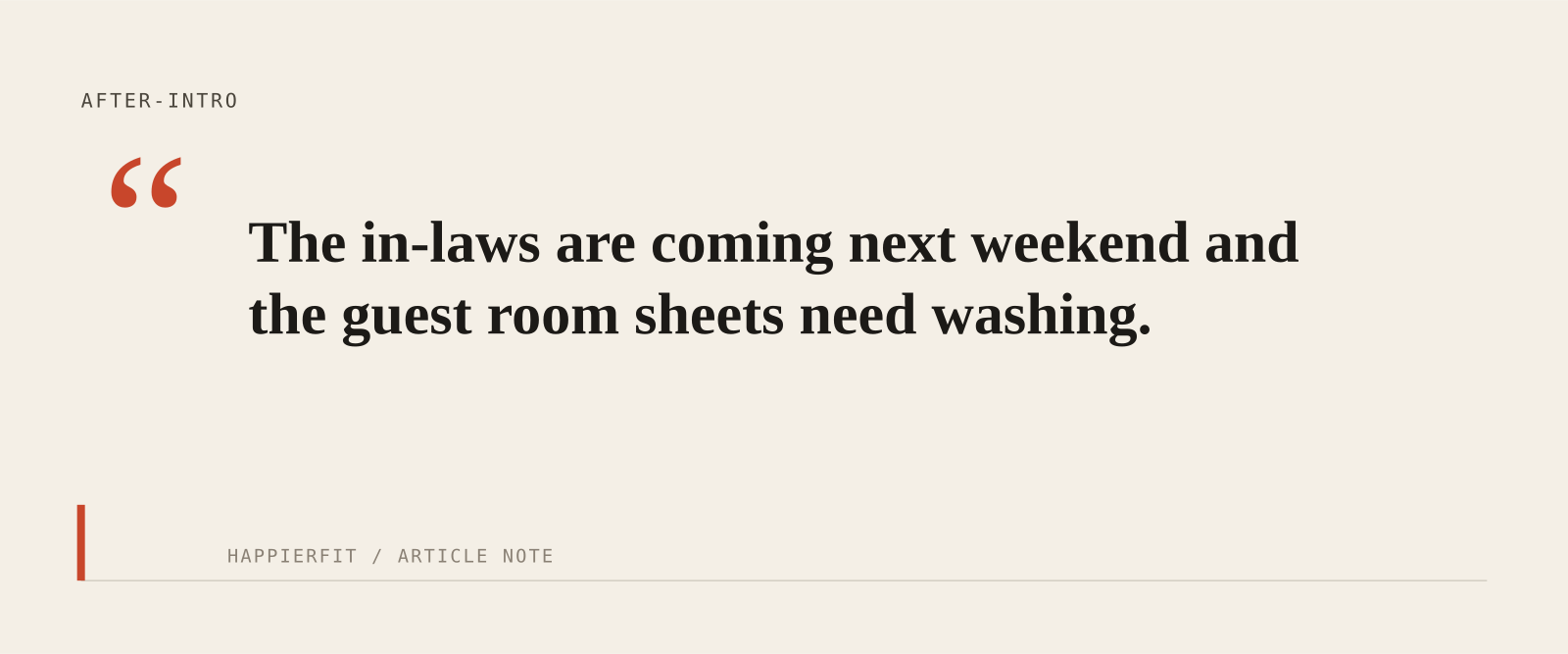
Did I sign the permission slip? The dog’s vet appointment is Thursday — no, it got moved to Friday. We’re almost out of his allergy medication. The in-laws are coming next weekend and the guest room sheets need washing. Her daughter mentioned a girl at school was being mean. She should probably email the teacher. Also: when was the last time anyone changed the water filter?
None of this will show up on a to-do list. None of it will earn recognition. And none of it will stop — because in most households, there’s only one person tracking all of it.
This is the mental load. And it’s not just exhausting. It’s making women measurably, clinically sick.
What the Mental Load Actually Is
The term “mental load” (sometimes called “cognitive labor” or “invisible labor”) describes the ongoing, largely invisible work of managing a household and family: anticipating needs, planning logistics, tracking details, remembering deadlines, and coordinating everyone’s schedule. It’s the management layer that sits on top of physical tasks.
Sociologist Allison Daminger, in her foundational research at Harvard, broke cognitive labor into four distinct stages: anticipating needs, identifying options, deciding among them, and monitoring the results. Her 2019 study found that across all four stages, women did significantly more of this work than their male partners — even in couples who considered themselves egalitarian.
This isn’t about who does the dishes. It’s about who notices the dish soap is running low, remembers which brand doesn’t trigger their kid’s eczema, checks whether it’s on sale anywhere, and adds it to the list before it runs out.
Author Eve Rodsky, whose book Fair Play became a touchstone for this conversation, calls it “the curse of the default parent” — the person who becomes the household’s operating system, holding every thread, fielding every question, absorbing every forgotten detail.
The Numbers Behind Invisible Labor
The scale of this imbalance is staggering. According to the World Health Organization, women perform 76.2 percent of the world’s total unpaid care work — more than three times the amount men do. The International Labour Organization estimates that if unpaid care work were assigned a monetary value based on minimum wages, it would constitute 9 percent of global GDP — approximately $11 trillion annually.
In the United States, the Bureau of Labor Statistics’ American Time Use Survey consistently shows women spending roughly 37 percent more time on household activities than men, even when both partners work full-time. But these surveys primarily capture physical tasks — cooking, cleaning, childcare. The cognitive labor that wraps around those tasks is far harder to measure, which is precisely why it stays invisible.
A 2019 study in Sex Roles found that mothers were responsible for the cognitive labor of childcare (scheduling, planning, worrying) at rates far exceeding their share of physical childcare tasks — and that this cognitive dimension was the strongest predictor of relationship dissatisfaction and personal burnout (Ciciolla & Luthar, 2019).
How Mental Labor Damages Health: The Research
Here’s where the conversation shifts from frustrating to frightening. The mental load isn’t a lifestyle inconvenience. It’s a chronic stressor with documented physiological consequences.
Chronic Stress and Cortisol Dysregulation
The brain doesn’t distinguish between “a lion is chasing me” and “I’m managing 47 concurrent open loops with no backup.” Both activate the hypothalamic-pituitary-adrenal (HPA) axis and flood the body with cortisol.
When cognitive labor is relentless — which it’s, because households don’t take weekends off — cortisol levels remain chronically elevated. A landmark meta-analysis published in Psychoneuroendocrinology found that chronic psychosocial stress, particularly stress characterized by uncontrollability and social-evaluative threat, produces sustained cortisol dysregulation linked to inflammation, immune suppression, and accelerated cellular aging (Miller, Chen, & Zhou, 2007).
Women carrying the mental load live in a state of perpetual vigilance. The planning never ends. The monitoring never pauses. The cortisol never fully clears.
Sleep Destruction
One of the most immediate health casualties of the mental load is sleep. A 2022 study in Sleep Health found that mothers with higher levels of cognitive household labor reported significantly worse sleep quality, longer sleep onset latency, and more nighttime awakenings — independent of their physical workload or paid employment hours (Richter et al., 2022).
This isn’t insomnia caused by screen time or caffeine. It’s insomnia caused by a brain that can’t power down because it’s running the household’s operating system 24 hours a day. And chronic sleep disruption isn’t benign: it’s independently associated with cardiovascular disease, metabolic syndrome, depression, and impaired immune function.
Cardiovascular Risk
The connection between chronic stress and heart disease is well-established. But research increasingly shows that the type of stress women experience through invisible labor carries specific cardiovascular risks.
A 2021 study in the Journal of the American Heart Association found that women reporting high levels of caregiving strain had a 21 percent higher risk of cardiovascular disease compared to women without caregiving responsibilities, after adjusting for traditional risk factors like smoking, BMI, and cholesterol (Buyck et al., 2013; Capistrant et al., 2012).
The mechanism isn’t mysterious: chronic cortisol elevation promotes arterial inflammation, raises blood pressure, disrupts glucose metabolism, and accelerates atherosclerosis. When the stressor is permanent — and the mental load is permanent — the damage compounds.
Mental Health: Beyond “Just Stressed”
The mental health toll extends well past garden-variety stress. Research published in the Journal of Family Psychology found that the inequitable distribution of cognitive household labor was a stronger predictor of maternal depression than the division of physical housework (Ciciolla & Luthar, 2019).
This matters because the mental load carries a specific psychological toxicity: it’s invisible. When labor isn’t seen, it isn’t acknowledged. When it isn’t acknowledged, the person doing it begins to feel simultaneously indispensable and completely unvalued — a combination that maps precisely onto the psychological profile of burnout.
The WHO formally recognized burnout in ICD-11 as an occupational phenomenon characterized by exhaustion, mental distance from one’s responsibilities, and reduced efficacy. Household cognitive labor checks every box — except it isn’t recognized as “occupation” by anyone counting.
Immune Function and Inflammation
A growing body of research connects chronic psychosocial stress to systemic inflammation — the kind that underlies autoimmune conditions, chronic pain, and accelerated aging. A study in Proceedings of the National Academy of Sciences demonstrated that chronic stress exposure was associated with elevated inflammatory markers (IL-6, TNF-alpha, CRP) and reduced immune cell sensitivity to cortisol’s anti-inflammatory signals (Cohen et al., 2012).
Women carry a disproportionate share of autoimmune diagnoses already — roughly 80 percent of autoimmune disease patients are female. Adding chronic, unrelenting cognitive stress to an immune system already primed for inflammatory overreaction isn’t a neutral act.
Why “Just Ask for Help” Doesn’t Work
The most common advice given to women drowning in the mental load is: “Just ask your partner for help.” This advice fundamentally misunderstands the problem.
Asking for help still leaves one person as the manager. It adds another task — the task of delegating, explaining, supervising, and following up. As Daminger’s research shows, it’s the anticipating and monitoring stages that are most unequally distributed and most draining. Delegating a physical task while retaining the cognitive wrapper around it provides minimal relief.
Rodsky’s Fair Play framework addresses this directly: the goal isn’t “helping more.” It’s full ownership of complete tasks — from conception through execution through follow-up — so that the cognitive burden actually transfers. “I’ll do it if you remind me” isn’t redistribution. It’s adding a management layer to an already overloaded system.
What Actually Helps: Evidence-Based Strategies
There’s no supplement, app, or morning routine that fixes a structural problem. But there are strategies grounded in research that meaningfully reduce the health damage of cognitive labor.
1. Make the Invisible Visible
The first step is documentation. Write down every recurring household task — not just the physical ones, but the planning, scheduling, tracking, and anticipating that surrounds them. Daminger’s four-stage framework (anticipate, identify, decide, monitor) is a useful lens. Most couples are shocked by the asymmetry this reveals.
This isn’t about scorekeeping. It’s about transforming invisible work into visible, discussable, redistributable work.
2. Transfer Ownership, Not Tasks
Borrowing from Rodsky’s model: redistributing the mental load means transferring complete ownership of domains, not individual to-do items. One partner fully owns the children’s medical care — from tracking vaccination schedules to booking appointments to filling prescriptions. The other partner never has to think about it again.
The key word is “never.” If the transferring partner is still monitoring, worrying, or reminding, ownership hasn’t actually transferred.
3. Protect Sleep as a Non-Negotiable
Given the documented impact of cognitive labor on sleep, treating sleep hygiene as a health intervention — not a luxury — is critical. This may mean establishing “brain dump” practices before bed (writing down every open loop so the brain can release it), creating hard boundaries around evening planning conversations, or alternating which partner handles nighttime disruptions on a predictable schedule.
4. Build Genuine Recovery Time
Not “self-care” as marketed — not face masks and bubble baths while mentally running through tomorrow’s schedule. Actual cognitive rest: time where no one is asking you questions, no one needs you to decide anything, and no one will text you a photo of the fridge asking “is this still good?”
Research on burnout recovery consistently shows that psychological detachment from work demands is the single strongest predictor of recovery (Sonnentag & Fritz, 2015). For the person carrying the mental load, this means someone else must be fully in charge during recovery periods. Not “available if needed.” In charge.
5. Address Health Impacts Directly
If you’re experiencing chronic headaches, unexplained chest tightness, persistent insomnia, digestive issues, or cycles of getting sick every time you finally rest — these are not personal failures or mysterious ailments. They’re predictable physiological responses to sustained cognitive overload.
Talk to a healthcare provider about stress-related symptoms specifically. Request screening for cortisol dysregulation, inflammatory markers, and sleep disorders. Name the mental load as a chronic stressor in your medical history. It belongs there.
6. For Partners: Understanding Is Not Optional
If you’re reading this and you’re the partner who doesn’t carry the mental load — this section is for you.
Your partner’s exhaustion isn’t about the tasks themselves. It’s about the fact that their brain never fully powers down. They’re running a project management system with no weekends, no vacations, and no recognition. The health consequences described in this article — the cortisol, the cardiovascular risk, the immune dysfunction, the sleep destruction — are happening inside the person you love.
“Just tell me what to do” isn’t the answer. Proactively taking full ownership of household domains — without being asked, without needing reminders, without requiring supervision — is how cognitive labor actually redistributes. Daminger’s research is clear: it’s not the doing that exhausts. It’s the anticipating, the deciding, and the monitoring.
The Bigger Picture
The mental load isn’t a personal failing or a relationship quirk. It’s a systemic issue with measurable health consequences that fall disproportionately on women. The research is unambiguous: chronic cognitive labor drives cortisol dysregulation, sleep disruption, cardiovascular risk, immune dysfunction, and depression.
Solving it requires more than individual negotiation within households — it requires workplace policies that acknowledge caregiving as real labor, healthcare systems that screen for chronic stress as aggressively as they screen for cholesterol, and a cultural shift that stops treating household management as something that “just happens.”
But it starts with seeing it. Naming it. Measuring it. And refusing to accept that one person’s health should be the silent cost of keeping everything running.
If you recognized yourself in this article — or recognized your partner — you’re not alone. Our [caregiving burnout series] and [somatic symptoms articles] go deeper into the physical and emotional toll of invisible labor. The first step is always the same: stop pretending the load isn’t there.
References
Buyck, J. F., et al. (2013). Cardiovascular disease risk and caregiving strain among informal caregivers. Journal of the American Heart Association, 2(2), e000183.
Ciciolla, L., & Luthar, S. S. (2019). Invisible household labor and ramifications for adjustment: Mothers as captains of households. Sex Roles, 81(7-8), 467-486.
Cohen, S., et al. (2012). Chronic stress, glucocorticoid receptor resistance, inflammation, and disease risk. Proceedings of the National Academy of Sciences, 109(16), 5995-5999.
Daminger, A. (2019). The cognitive dimension of household labor. American Sociological Review, 84(4), 609-633.
International Labour Organization. (2018). Care work and care jobs for the future of decent work. Geneva: ILO.
Miller, G. E., Chen, E., & Zhou, E. S. (2007). If it goes up, must it come down? Chronic stress and the hypothalamic-pituitary-adrenocortical axis in humans. Psychoneuroendocrinology, 32(8-10), 827-842.
Richter, D., et al. (2022). Associations between household cognitive labor and sleep quality in mothers. Sleep Health, 8(2), 191-197.
Rodsky, E. (2019). Fair Play: A Game-Changing Solution for When You Have Too Much to Do (and More Life to Live). New York: G.P. Putnam’s Sons.
Sonnentag, S., & Fritz, C. (2015). Recovery from job stress: The stressor-detachment model as an integrative framework. Journal of Organizational Behavior, 36(S1), S72-S103.
World Health Organization. (2019). Delivered by women, led by men: A gender and equity analysis of the global health and social workforce. Geneva: WHO.
Bureau of Labor Statistics. (2023). American Time Use Survey. U.S. Department of Labor.
Free: read one full protocol chapter
Most people spend years understanding their patterns without anything actually changing. This 3-day audit shows you what’s underneath the exhaustion, the spinning thoughts, or the numbness — and the one shift that moves it.
No email needed.
Evidence-based pieces on emotional fitness, by email.
No therapy-speak. No platitudes. Just the research and what it actually means for the next thing you’ll feel today.
Free and occasional, no fixed schedule. Unsubscribe anytime.